

 Back
Back
How therapy can support better mental health and emotional resilience
By: Benefits by Design | Sunday June 7, 2026
Updated : Thursday August 20, 2026

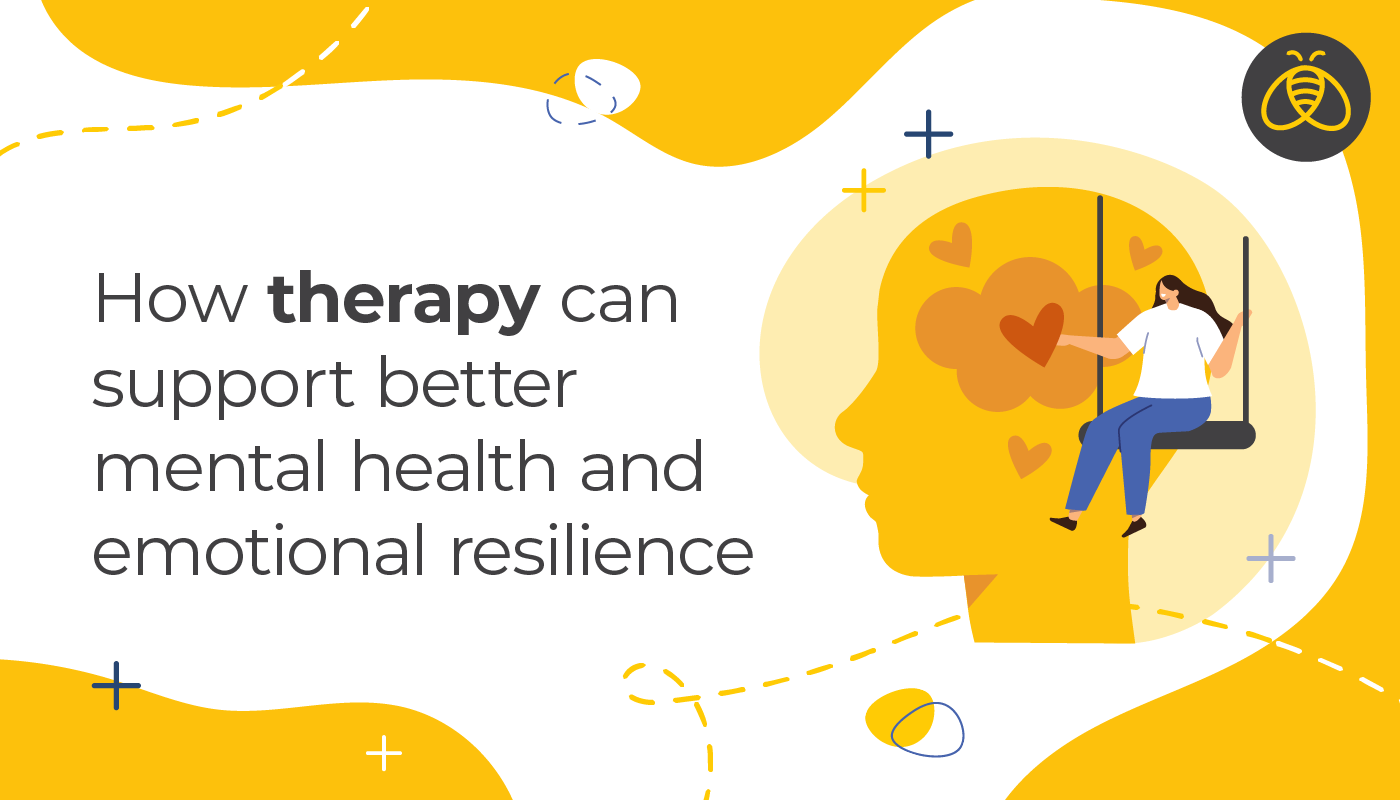
Many of us were never taught how to actively care for our mental health. We learned how to brush our teeth, eat reasonably well, and exercise. But the emotional side of wellbeing was often treated differently—something to manage quietly, push through, or simply hope would improve with time.
The reality is that mental health requires the same attention and care as physical health. Research has consistently shown that therapy can help people develop healthier coping skills, improve emotional regulation, reduce symptoms of anxiety and depression, and build greater resilience during life’s challenges.
Therapy is one of the few places where that mental and emotional care actually gets the attention it deserves. It’s not just for people in crisis, and it isn’t a sign that something is wrong with you. Rather, it’s a structured, evidence-based process that helps you better understand your thoughts, emotions, and behaviours while developing practical tools to navigate challenges more effectively.
Here’s how therapy works, the benefits it can offer, and why so many people find it transformative for both their mental health and overall quality of life.
1. Therapy teaches emotional skills most of us were never taught
Most of what we know about handling emotions comes from our families, friends, and the environments we grow up in. Sometimes that informal education works well. Other times, they leave us relying on patterns that may no longer be helpful. Without realizing it, many people develop habits such as avoidance, self-criticism, people-pleasing, or emotional suppression as ways to cope with difficult experiences.
One of the key benefits of therapy is that it helps identify these patterns and replaces them with healthier, more effective strategies. Therapists draw from evidence-based approaches such as cognitive-behavioural therapy, mindfulness-based techniques, somatic practices, and attachment-focused interventions. These methods are designed to help people better understand their thoughts, regulate emotions, improve relationships, and respond to challenges with greater resilience.
2. A place where you can speak freely
Where in your daily life can you talk openly about anything without worrying about how the other person will react, what they’ll tell others, or whether they’re judging you? For most adults, the honest answer is nowhere. Even close friendships and supportive partners have limits, both in confidentiality and in the emotional bandwidth they can offer.
Therapy creates a space specifically designed for that kind of openness. A trained professional, bound by confidentiality, whose entire focus during your session is helping you understand yourself better. That space alone is valuable, even before the specific therapeutic work begins.
Simply putting thoughts and feelings into words can bring clarity. Many people discover that concerns that once felt overwhelming become easier to understand when they are explored in a supportive, nonjudgmental environment. Therapy provides a space where reflection can lead to insight, and insight can lead to meaningful change.
3. It builds emotional resilience over time
Resilience isn’t something you either have or don’t have. It’s a set of capacities that can be built and strengthened: the ability to sit with difficult emotions, recognize unhelpful thought patterns, and recover from setbacks without spiraling.
Working with a therapist like Clayre Sessoms Psychotherapy gives clients a consistent, supportive relationship in which to develop those capacities deliberately rather than hoping they’ll grow on their own over time.
This is one of the biggest shifts that long-term therapy can create. People who once felt overwhelmed by relatively minor stressors often find themselves navigating much larger challenges with greater calm and perspective. The growth may not feel dramatic from week to week, but looking back six months or a year later, the change is often remarkable.
4. It helps you understand the patterns you keep repeating
Most of us notice, eventually, that certain patterns keep showing up in our lives. The same conflicts in different relationships. The same struggles with confidence or self-worth. The same anxieties that emerge at predictable moments.
These patterns rarely happen by accident. They often have roots in earlier experiences, family dynamics, or beliefs we absorbed without consciously recognizing them. Left unexamined, they can continue influencing our choices and relationships for years.
Therapy provides an opportunity to explore these patterns in a deeper way. By understanding where they come from and how they operate, people can begin making more intentional choices instead of repeating the same cycles. This deeper awareness often becomes the foundation for lasting personal growth.
5. It supports you through life transitions
Big life changes — career shifts, breakups, becoming a parent, losing someone you love, moving to a new city — bring stress even when they’re positive. The combination of emotional weight and practical disruption can overwhelm even people who normally handle things well.
Therapy during transitions doesn’t just help you cope. It helps you process what’s actually happening, recognize how the change is affecting you, and make decisions that align with what you genuinely want rather than what fear, habit, or pressure might push you toward. The transitions become opportunities for growth instead of just challenges to survive.
6. It’s more effective than most people realize
There’s still a perception in some circles that therapy is slow, vague, or doesn’t really do much beyond letting you vent. The research tells a very different story.
According to the American Psychological Association, psychotherapy has been shown to be effective for a wide range of mental health concerns, with most people reporting meaningful improvement and roughly 75% of those who engage in therapy showing some benefit.
Different approaches work better for different concerns, and finding the right therapist matters enormously. But the overall effectiveness of therapy as a category is well established, and most people who give it a real chance find it more useful than they expected.
7. It becomes a long-term investment in yourself
People who remain in therapy for extended periods often describe it as one of the most valuable investments they have made in themselves. Not because it eliminates every problem, but because the awareness, coping skills, and self-understanding developed through therapy continue to provide value long after individual sessions end.
The work done in therapy doesn’t end when the session ends. It influences how you navigate relationships, respond to conflict, make important decisions, and manage future challenges. Over time, these benefits compound.
This is one of the underrated aspects of therapy. The benefits aren’t just emotional. They affect career decisions, relationship quality, parenting, and the everyday texture of how you experience your own life.
Final thoughts
Mental health support has come a long way from the days when it was reserved for crisis or hidden as a sign of weakness. Today, more people than ever are recognizing therapy for what it actually is: a structured, effective way to support your emotional wellbeing, build resilience, and understand yourself better in a world that asks a lot of all of us.
If you’ve been considering therapy but haven’t taken the first step, the process is often more approachable than many people expect. An initial consultation is usually brief, sometimes free, and can help you determine whether a particular therapist is the right fit before making a longer-term commitment.
The best time to invest in your mental health isn’t necessarily when things have already fallen apart. It’s when you have the opportunity to build the skills, awareness, and resilience that can support you through whatever comes next. The benefits of that investment can continue shaping your relationships, decisions, and overall wellbeing for years to come.
Looking for more information on how to navigate therapy?
Understanding the road to mental health support