

 Back
Back
9 unexpected ways to improve your mental health
By: Benefits by Design | Tuesday September 29, 2026


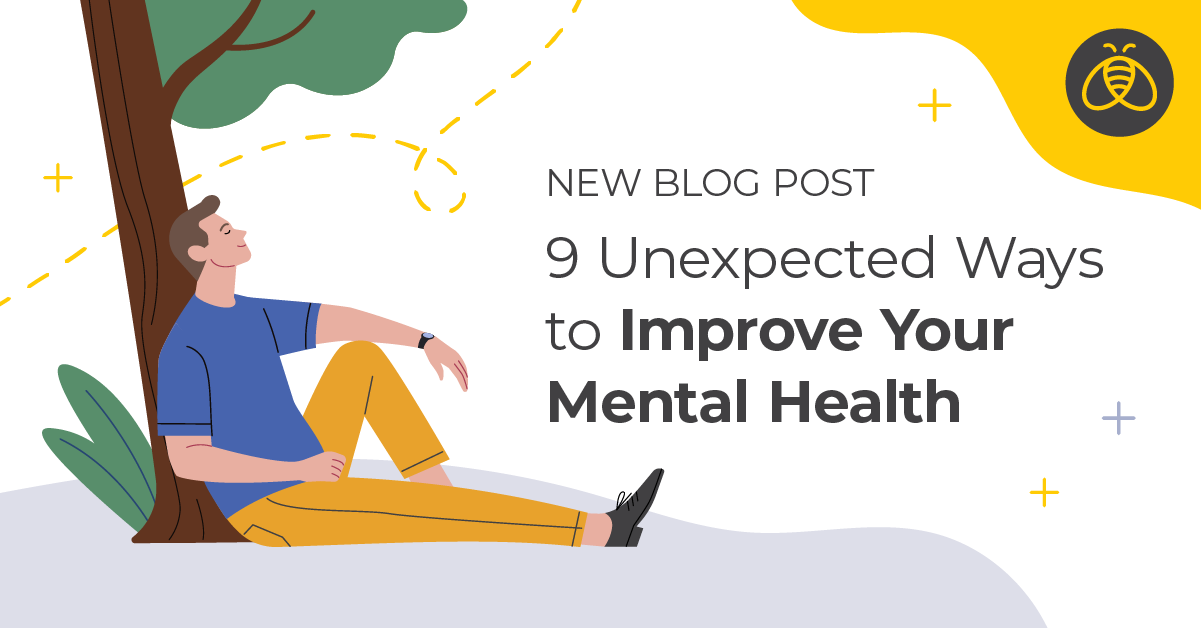
Mental health is part of everyday health for people living in Canada, and supporting it doesn’t always have to begin with a meditation app, gym membership, or dramatic lifestyle overhaul. Sometimes, an unusual hobby, a small creative ritual, or a stronger connection to your community can help improve your mental health and give your mind a useful change of pace.
These ideas aren’t substitutes for professional mental health care. Think of them instead as approachable experiments: ways to add more movement, connection, creativity, nature, or purpose to an ordinary week.
A few ideas worth remembering
You don’t need to try everything. Pick one activity that sounds genuinely interesting, making it easy enough to repeat. The strongest candidates tend to have something else going for them besides “working on your mental health”: birdwatching gets you outside, volunteering connects you with people, and art gives emotions somewhere to go. If an activity becomes another obligation, try something else.
1. Become a birdwatcher—even in the city
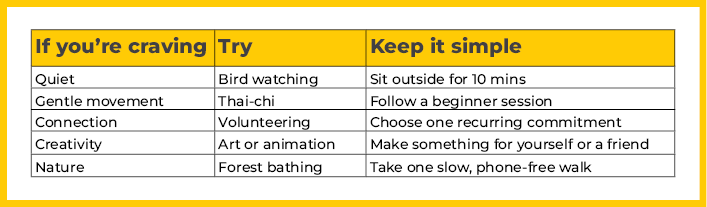
Birdwatching is surprisingly well suited to Canadian life. You can look for chickadees in a neighbourhood park, watch migrating birds near wetlands, or simply spend 10 minutes noticing what’s outside your window. You might be surprised by the benefits.
The real exercise is attention. Instead of replaying tomorrow’s worries, you’re listening for a call, watching movement and noticing details. Start without buying anything: choose a familiar walking route and see how many different birds you can spot.
2. Borrow a dog before getting one
Pets can provide companionship, routine and opportunities for social interaction. CAMH, for example, incorporates pet therapy into patient wellness programming.
But adopting an animal is a major responsibility, not a wellness hack. Before committing, consider dog-sitting for a friend, helping a neighbour walk their dog or volunteering with an animal organization. You can discover whether animal companionship fits your lifestyle without making an impulsive commitment.
3. Try forest bathing without making it complicated
Canada’s parks, forests and conservation areas make slow, deliberate time in nature particularly accessible in many communities.
Forest bathing doesn’t need to become a formal expedition. Put away your phone, walk slowly and pay attention to temperature, sounds, textures and smells. The objective isn’t kilometres travelled. It’s noticing where you are.
4. Give your brain something to make
Drawing, collage, pottery, knitting and photography can provide an outlet when thoughts are difficult to put into sentences.
Digital creativity can serve a similar purpose. Someone might turn a journal thought into a gentle visual story, animate a reassuring reminder, or create a playful clip that captures a mood. Try something like the Adobe Firefly AI animation maker, which can transform text prompts, sketches and images into 2D or 3D animated video without requiring advanced animation skills. The goal isn’t to produce a masterpiece; it’s to give an emotion or idea a different form.
5. Match the activity to what you need
6. Learn tai chi
Tai chi combines deliberate movement, balance and focused breathing without requiring an intense workout. Look for beginner classes through local recreation centres, community organizations, or online instruction.
Start tiny: learn a few movements rather than attempting an entire sequence. Slow practice can become a transition ritual between work and home or between a hectic day and bedtime.
7. Volunteer somewhere that has nothing to do with your career
Professional life can dominate identity. Volunteering creates another role: trail helper, food-bank volunteer, community-garden participant, event assistant or animal-care volunteer.
Volunteering is a way for people to come together around causes they care about, with opportunities ranging from recreational activities to research and social support. Choose a cause that matters to you rather than one that merely looks impressive.
8. Start a tiny neighbourhood ritual
Social connection doesn’t require a packed calendar. Try something deliberately small:
- Organize a monthly soup night with two neighbours.
- Start a Sunday morning walking group.
- Create a neighbourhood puzzle or book swap.
- Invite a friend for a recurring phone-free coffee.
- Join a community garden and learn the names of the regulars.
Predictability matters here. A recurring ritual removes the repeated effort of deciding when and how to connect.
9. Make a personal “curiosity project”
Pick a subject that has no productive purpose whatsoever: northern lights, local architecture, mushrooms, family recipes, constellations, Canadian railway history or urban wildlife.
Then spend a month exploring it. Visit a library. Keep a notebook. Photograph examples. Talk to somebody who knows more than you do.
Not everything in life needs to become a side hustle. Curiosity can simply give your attention somewhere interesting to land.
A seven-day experiment
Rather than rebuilding your routine overnight, test one idea.
☐ Choose an activity you actually want to try.
☐ Make the first attempt 10–30 minutes.
☐ Remove unnecessary costs or equipment.
☐ Notice your mood before and afterward.
☐ Repeat it once during the week.
☐ Decide whether to continue, modify or replace it.
The objective isn’t perfect consistency. It’s finding something you naturally want to return to.
When a hobby isn’t enough
Everyday activities can support well-being, but they shouldn’t be expected to carry the weight of a mental health crisis. The Government of Canada’s Mental health support: Get help resource lists national, provincial and territorial services, along with specialized resources for youth, Indigenous Peoples, veterans and others. If you or someone you know is thinking about suicide, Canada’s 9-8-8 Suicide Crisis Helpline is available by call or text, 24 hours a day, seven days a week.

Frequently asked questions
Which activity should I try first?
Choose the one with the lowest friction. If you already walk regularly, add birdwatching. If you’re indoors often, try a nature activity. If loneliness is the bigger issue, consider volunteering or a recurring social ritual.
Do I need to spend money on these activities?
Not necessarily. Walking in nature, birdwatching, drawing with basic materials, volunteering and starting a neighbourhood ritual can all be inexpensive or free.
Can these activities replace therapy or medication?
No. They are everyday well-being practices, not replacements for treatment recommended by qualified health professionals. If symptoms are persistent, severe or interfering with daily life, consider seeking professional support.
Improving your mental health doesn’t always require turning life upside down. Sometimes the useful change is simply giving your attention, body or imagination somewhere new to go. Try one experiment, notice what it changes, and keep the activities that make everyday life feel a little more connected, absorbing or manageable.
This has been a guest blog post by Susan Treadway of Rehab Holistics.