

 Back
What employee benefits miss when they focus only on the workplace
By: Benefits by Design | Tuesday November 10, 2026
Updated : Friday November 6, 2026

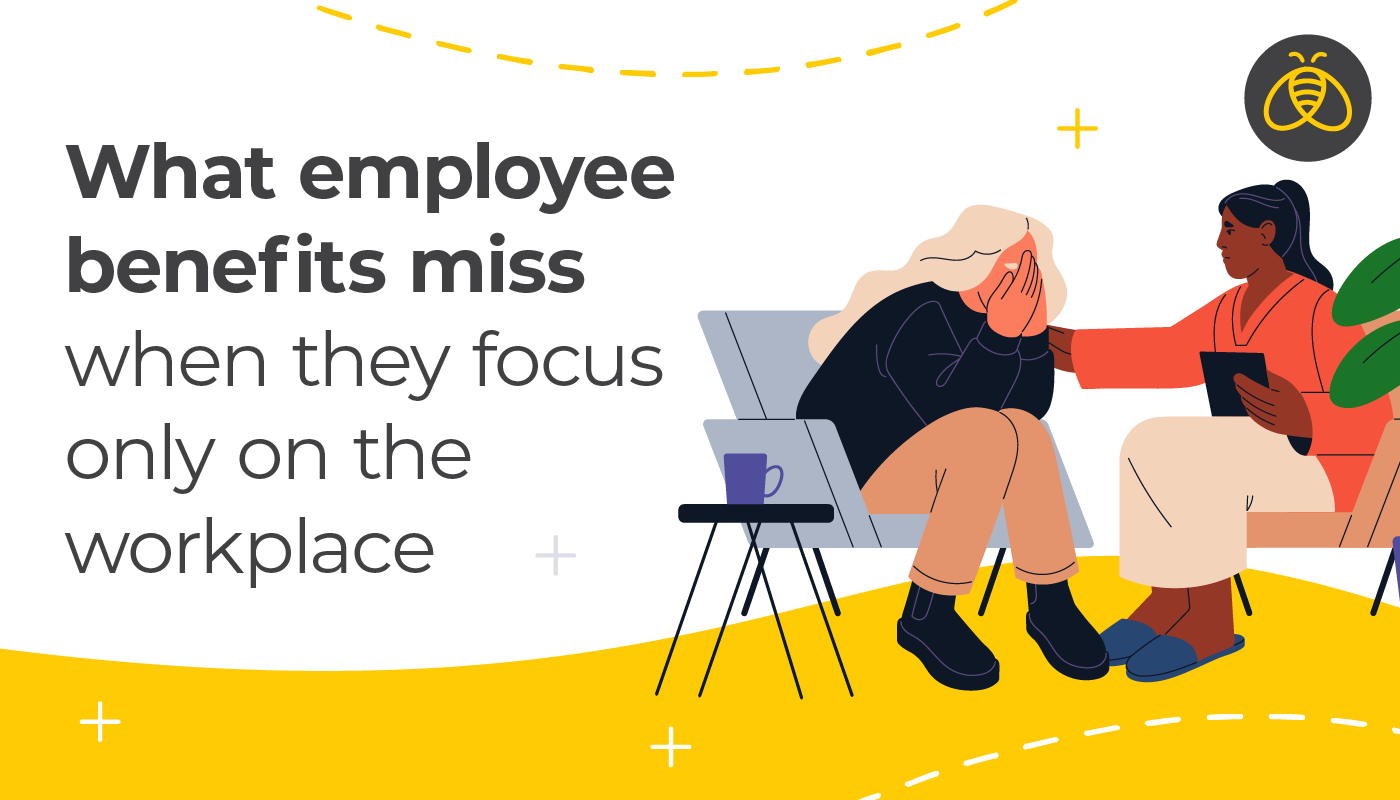
An employee can have a generous dental plan, an ergonomic chair, and a supportive team. That same person can still spend every workday distracted by a sick parent or a stressful move. Problems that start at home rarely stay there, and they show up as missed deadlines, sick days, and eventually resignations.
That gap is exactly why employee benefits shouldn’t focus only on the workplace. For Canadian employers, especially small and mid-sized businesses competing for talent, the strongest benefits plans now support the whole person. They recognize that productivity depends on what happens before 9 a.m. and after 5 p.m. as much as during the hours in between.
What do workplace-only benefits usually leave out?
Workplace-only benefits usually leave out the personal pressures that shape how employees feel when they arrive at work. Traditional plans focus on health and dental coverage, disability insurance, and perks tied to the office, such as gym discounts or catered lunches. Those offerings still have value, but they assume an employee’s main challenges happen on the job. For a small business with 20 employees, that narrow focus can leave real problems unaddressed.
Many employers are now rethinking that assumption. Strategies for maximizing your benefits package increasingly treat mental and physical health as connected, and they include tools like a wellness spending account (WSA). A WSA is a taxable allowance employees can spend on wellness products and activities they choose themselves, from fitness classes to meditation apps.
Why employee benefits shouldn’t focus only on the workplace
Much of the stress that reduces performance at work comes from external sources. Financial worries, family responsibilities, health concerns at home, and major life transitions all follow employees into meetings and onto job sites. When a benefits plan ignores those pressures, employers end up paying for them indirectly through absenteeism, presenteeism, and turnover. Those costs rarely appear as a single line item, so they are easy to miss.
Presenteeism is the loss of productivity that occurs when employees show up to work but cannot function at their usual level. It costs employers money without appearing on any attendance report, which makes it easy to underestimate. A plan that supports life outside work reduces presenteeism at its source can help address issues before they cause damage.
How do major life changes affect employees at work?
Major life changes affect employees at work by draining the focus and energy they would normally bring to their roles. A new baby, a divorce, a parent’s diagnosis, or a cross-country relocation can disrupt sleep, finances, and routines for months. Most employees keep working through these events, and many never mention them to a manager. Their output may slip quietly before anyone notices a pattern.
Relocation is a common example, especially for employers recruiting talent from other provinces. A new hire may arrive on schedule, yet the move itself rarely ends when the boxes are unpacked. For many people, feeling settled takes longer than expected, since they still need a family doctor, a school, and community. Relocation support that extends beyond moving day, such as EAP counseling or flexible start dates, helps new hires reach full productivity sooner.

How can employee benefits support employees beyond the workplace?
Benefits reach into employees’ home lives when they address money, family, health, and time, not just clinical care. Many of the most effective options cost relatively little compared with the turnover they help prevent. Useful examples include:
- Employee assistance programs with counseling for personal, financial, and legal issues
- Wellness spending accounts that employees direct toward their own priorities
- Caregiver support such as eldercare referrals and flexible leave
- Financial wellness tools including budgeting help and retirement planning
- Relocation assistance that continues after the move itself
An employee assistance plan is often the simplest place to start, because it gives employees and their families confidential access to counselors, financial advisors, and lawyers. Small employers can usually add one to an existing group plan without a major redesign. Reminding staff about the EAP a few times a year also improves how often they use it.
Many employees are quietly caring for someone at home
A significant share of Canadians are caring for someone at home, and many of them also hold jobs. According to Statistics Canada’s 2022 data on caregiving, 23% of Canadians aged 15 and older provided care to care-dependent adults. Unpaid caregivers for those adults spent a median of eight hours a week on that care.
Many of those caregivers never mention the load to their employer. Eight extra hours of weekly care often lands on evenings and weekends, which leaves little time for rest. Employers who offer eldercare resources, flexible scheduling, and paid caregiver leave can keep experienced staff who might otherwise cut their hours or leave.
How can employers build flexibility into their benefits?
Employers can build flexibility into benefits by giving employees more control over how and when they use support. Flexible spending accounts, choice-based plans, and adjustable schedules let each person direct resources toward the pressure they face right now. A 28-year-old new arrival in Calgary and a 50-year-old caring for a parent in Halifax rarely need the same benefits. Choice also signals trust, which strengthens loyalty over time.
Time off is another form of flexibility that reaches beyond the office. Including mental health days in employee packages gives staff permission to rest before stress turns into a longer absence. Clear communication is just as important, because employees cannot use support they do not know exists.
Support the whole employee, not just the job
Understanding why employee benefits shouldn’t focus only on the workplace helps employers design plans that match how people live. Caregiving, relocation, money stress, and mental health challenges all shape performance long before an employee logs in. Benefits that reach into those areas protect productivity, reduce turnover, and build loyalty that salary alone rarely secures. Start by reviewing your current plan against the life events your team faces most often, then fill the biggest gap first.
Want to know how other employers are supporting their employees?
2026 Benefits by Design Benchmarking Report