

 Back
Back
How small and mid-sized companies can compete with larger benefit plans
By: Benefits by Design | Tuesday April 14, 2026
Updated : Thursday August 20, 2026

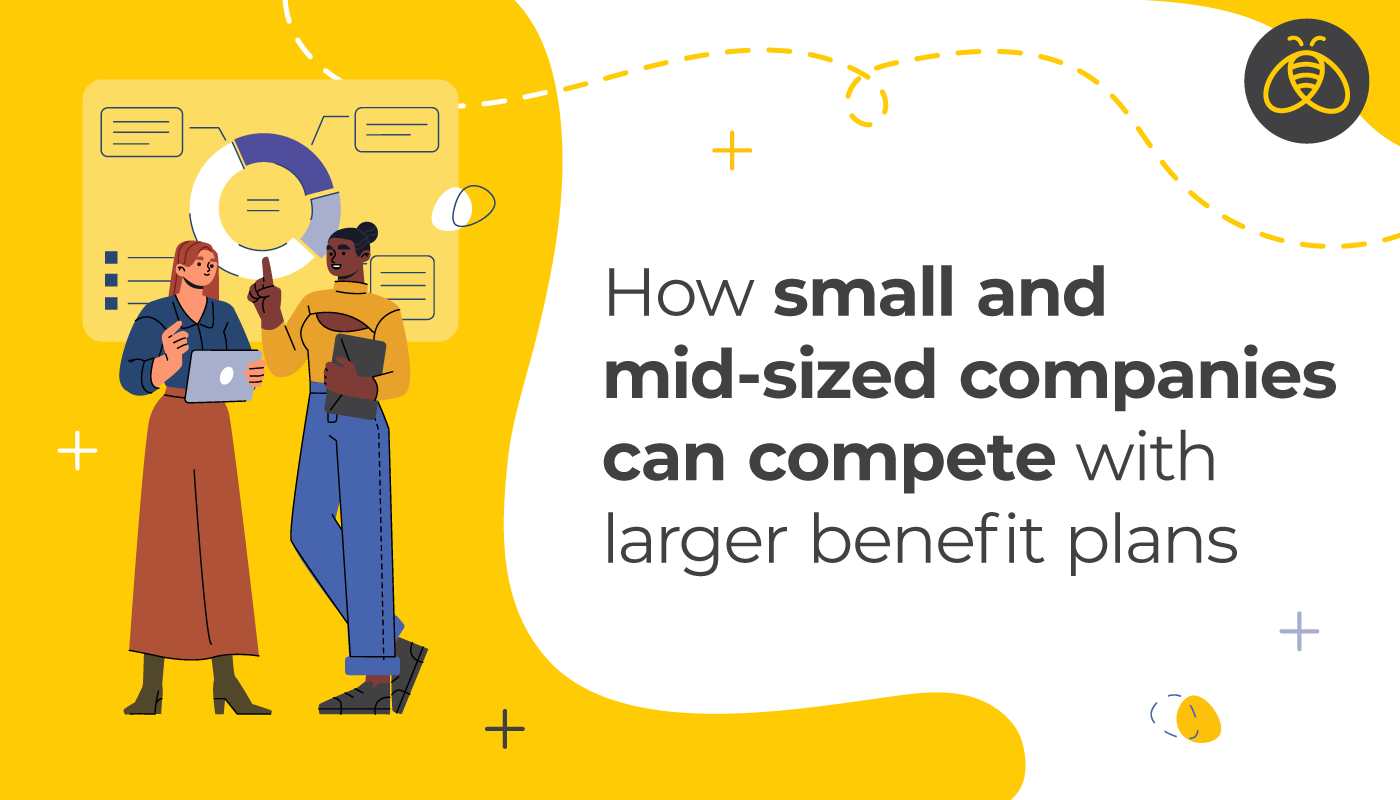
Many employers believe they cannot match the appeal of large corporate packages because bigger companies often have deeper budgets and broader offerings. That assumption leaves many leaders feeling stuck before they even review what their teams actually need. In reality, small and mid-sized companies can compete with larger benefit plans when they focus on relevance, flexibility, and employee priorities instead of trying to copy enterprise models. Strong employee benefits plans do not have to be the biggest in the market. They need to feel useful, well-structured, and easy for employees to understand and value.
Why does strategy matter more than size?
Large employers often win attention because they can list more features. Still, a long benefits menu does not always create a better employee experience. Workers usually care most about whether a plan supports their health, finances, time, and family life in practical ways. A smaller employer that offers the right mix of support can make a stronger impression than a larger employer with confusing or generic options.
This is where strategy changes the conversation. Instead of asking, “How can we offer everything a large company offers?” employers should ask, “What matters most to our workforce, and how can we deliver it well?” That shift leads to smarter decisions. It also helps businesses avoid wasting budget on perks that look nice in recruiting materials but add little real value in day-to-day life.
Understand what employees value now
Benefit decisions work best when they reflect current employee expectations. That means looking beyond assumptions. Some teams care most about health coverage and retirement support. Others place a higher value on paid leave, flexible work schedules, mental health support, or help with dependent care. A company with a younger workforce may focus on affordability and work-life balance, while a company with more experienced professionals may need stronger retirement and healthcare support.
Listening is essential here. Surveys, manager feedback, exit interviews, and enrollment trends can reveal where employees see value and where they see gaps. Employers who take the time to learn these patterns can build a benefit package that feels personal and well considered. That creates trust. It also helps leadership spend more precisely.
Build a targeted package instead of copying large employers
Trying to mirror a national employer line by line usually leads to frustration. Large companies may offer more programs simply because they have more layers, more people, and more buying power. That does not mean those programs are the best fit for a smaller or growing business. Employers should build around the needs of their own workforce, the realities of their budget, and the goals of their hiring plan.
This is one of the clearest ways small and mid-sized companies can compete with larger benefit plans. A targeted package can often feel stronger than a broad package that lacks focus. For example, a company that improves healthcare contributions, adds schedule flexibility, and strengthens paid leave may create more employee loyalty than one that spreads money across trendy perks with limited use. Focus often beats volume when the choices align with what people actually want.
Use data to reduce guesswork
Benefit planning should be informed by evidence, not instinct alone. Employers need to know how their current offerings compare in the market and how their employees perceive them internally. Without that information, it is easy to underinvest in key areas or overspend on options that do not move recruiting or retention.
A closer look at small business compensation insights can help leaders understand how pay and benefits work together. This matters because employees rarely separate compensation from benefits when they decide whether to join or stay with a company. They evaluate the full package. If salary is slightly below market, better health support, time off, or retirement contributions may improve the offer. If benefits are weak, stronger pay alone may not solve the issue.
Benchmark against the right companies
Benchmarking only helps when the comparison group makes sense. A 200-person regional firm should not judge itself against a national employer with offices across multiple provinces and a much larger HR budget. The better comparison is usually based on industry, company size, location, and workforce profile. That gives employers a more realistic picture of what the competition looks like.
Using benefits benchmarking with BBD can help employers identify where they are strong, where they are behind, and where change would have the most impact. This kind of review is especially useful when leaders need to make decisions under budget pressure. Instead of changing everything at once, they can rank priorities and improve areas most likely to support hiring and retention. Accurate benchmarking brings focus to the process and gives leadership more confidence in every adjustment.
Use flexibility as a real advantage
Smaller employers often have one clear advantage over larger organizations: they can adapt faster. Big companies often need months to update policies, approve benefit changes, or introduce new options. Smaller firms can usually respond more quickly to employee feedback and changing market conditions, which makes flexibility a real competitive strength.
Flexibility can take many practical forms, including:
- Hybrid and remote work options that support different work styles
- More choice in health and wellness plan design
- Voluntary benefits that let employees customize coverage
- Adjusted schedules that improve work-life balance
- Better support for parents, caregivers, and employees at different life stages
- Faster updates to policies when employee needs shift
- Personalized benefit options that reflect workforce priorities
Employees notice when an employer is willing to adjust instead of using the same approach for everyone. That kind of flexibility shows that leadership understands real employee needs and is prepared to respond in a practical way.
Make benefits part of your employer brand
Benefits should not sit in the background as an administrative item. They should be part of the company’s broader story about how it treats people. When employers connect benefits to culture, growth, and long-term support, candidates and employees see them as a sign of commitment rather than a box-checking exercise.
That is why many leaders are now focused on using industry benchmarking to create competitive benefits plans that fit both business goals and employee expectations. A thoughtful package supports more than hiring. It helps improve retention, strengthens trust, and gives managers a better foundation for keeping strong people engaged. When benefits are aligned with the company’s message and values, they become a practical tool for standing out in a crowded labour market.

Small and mid-sized companies can compete with larger benefit plans – if done right!
Competing with large employers does not require a larger budget in every case. It requires smarter choices, sharper focus, and a clearer understanding of what employees value most. Employers that listen well, benchmark carefully, communicate clearly, and improve with purpose can create benefit packages that stand out for the right reasons. In the end, small and mid-sized companies can compete with larger benefit plans by building offerings that are useful, flexible, and closely aligned with the people they want to attract and keep.
Looking for benefits benchmarking? Search no more!
The 2025 BBD Benchmarking Report — is your benefits plan competitive?